You're Not Paying the Real Cost of AI (Yet)
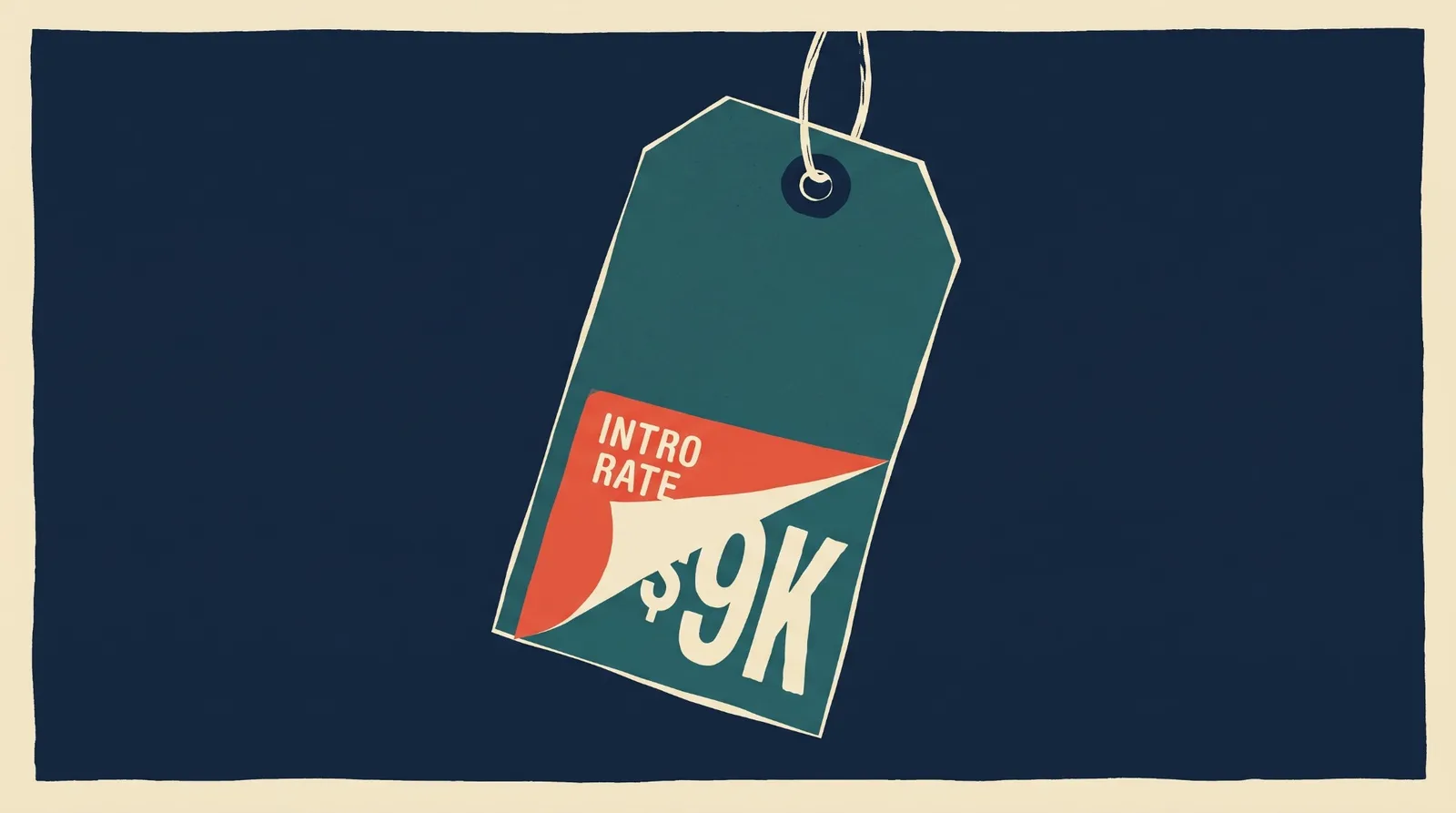
Nearly every organization that embraced AI over the last two years is carrying a quiet problem on its balance sheet. The pilots worked, the demos impressed leadership, and teams shipped copilots and agents. So far, the bill has been comfortable.
The AI bill has been cheap by design
The AI industry is in a land-grab. Providers subsidize adoption with promotional pricing, free tiers, startup credits, and steep discounts, all engineered to win your workloads and lock in your habits before the meter starts running in earnest.
That window is closing. As the market matures, list prices firm up, credits expire, and “intro” tiers convert to standard rates. For programs that scaled at discounted rates, the jump won’t be incremental. It will be the kind of surprise that triggers a hard look from finance and a freeze on the initiatives that were supposed to drive the next wave of value.
The AI cost visibility gap
It’s foreseeable, yet almost no one has instrumentation to analyze what’s coming. Most organizations can’t answer these basic questions:
- What does AI cost us? By team, business unit, or agent?
- Which models and providers are driving our spend?
- If our usage doubles next year, what does the bill look like? What happens when we start paying list prices?
- Could we get the same quality for less using a different provider or private model?
Lack of visibility is what makes these questions hard to answer.
Don’t lock down AI adoption
When finance or budget owners get surprised, the instinct is to clamp down. But the cost and accessibility gains from AI adoption are real, and the teams using AI will outperform the teams that don’t in the long term. Just putting caps on spend or pausing initiatives trades one problem for a bigger one. We need to invest smarter.
Enterprises already learned the alternative with cloud and SaaS: instrument variable spend instead of banning it. See it precisely, attribute every dollar to an outcome, and plan for where it’s heading before the bill arrives.
The subsidies are ending on a timeline you don’t control; whether it arrives as a surprise depends on what you can see today.
Take control of your AI bill today
Holokai empowers teams to not only account for their AI bill, but take advantage of it. Using the model sandbox capability, you can evaluate different models tackling the same task side-by-side. This can show that a model costing a fraction of the incumbent clears the same quality bar at near-identical rates—which means you can move the workload and cut its bill. Just as often, it shows the premium model really is worth it for one critical workflow and overkill for ten others. With Holokai, you pay less for the same outcome.
Holokai also closes the visibility gap. Because every request flows through one gateway and is measured against one source of truth, the platform becomes the natural control point for governance. Costs are attributed, so accountability is real. Teams see their own consumption, and spend can be allocated rather than absorbed into one anonymous bill. Trends surface the moment they start, so a runaway feature or a misbehaving integration shows up as an anomaly on a chart instead of a shock on next month’s invoice.
Our white paper, The Coming AI Bill, breaks down how to turn AI cost from a guess into an informed decision: how to see, plan, optimize, and contain your AI spend across every model and provider. If you’re a finance, technology, or platform leader trying to get ahead of the bill, that’s your next read.